I develop microscopic tools to quantify how viruses interact with their hosts, currently using bacteriophages (viruses of bacteria) as a model system. This research supports the development of phage therapy strategies to combat antimicrobial resistance—a major public-health challenge. Some of my work has been published and is linked below.
At Yale, I am affiliated with the following entities:
Paul Turner Lab, Department of Ecology & Evolutionary Biology
Closely collaborated with Thierry Emonet Lab, Molecular, Cellular, and Developmental Biology
Recently joined Joerg Bewersdorf Lab to perform image analysis on super-resolution microscopy datasets and to learn building new optical microscopy modalities
I took an advanced summer course on microscopy in 2022: Optical Microscopy & Imaging in the Biomedical Sciences at Marine Biological Laboratories, Woods Hole, MA (USA). Having fallen in love with the course, I have been going back as a Research Facilitator.
I contribute to scientific service and open science through editorial/society roles, method-sharing, and community outreach. To this end, I…
serve on the editorial board of mSystems, a non-profit journal by the American Society for Microbiology (ASM)
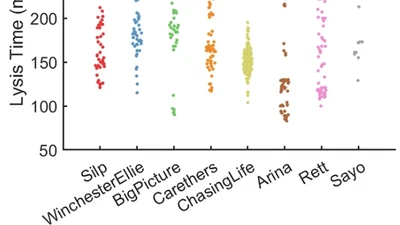
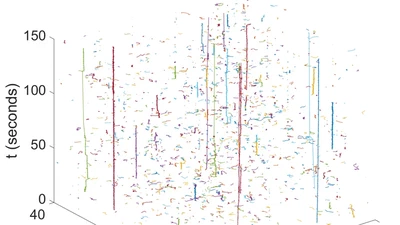
We wrote a perspective on the need and recently developed approaches to study individual virus traits in the most numerous viruses on our planet (phages).
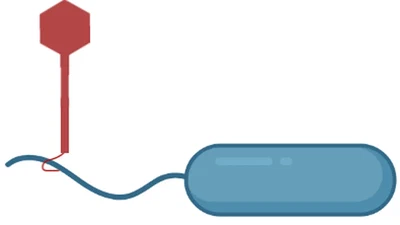
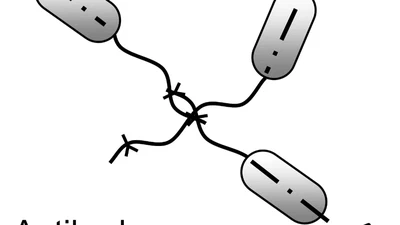
We replaced a (literally) century-old laborious assay to measure the attachment of viruses to bacteria. We developed a fast and efficient microscopy-approach to measure attachment …
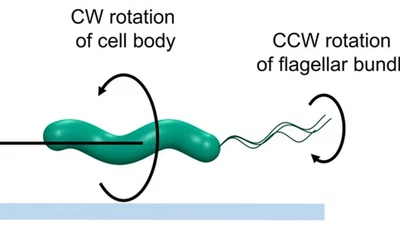
Phage χ can only infect E. coli with functional rotating flagella!! We studied what happens when bacteria are forced to evolve against this phage. We found: some bacteria swim …
New England Biolabs (NEB) developed a Golden Gate method to engineer synthetic bacteriophages. I validated the expression of fluorescent proteins engineered into synthetic phage …
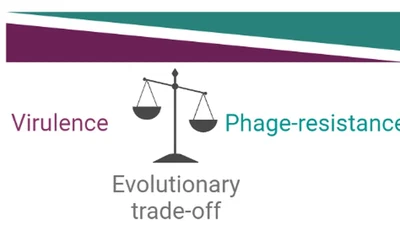
Bacteria are great at evolving resistance to anything that we throw at them. This has caused antibiotic resistance crisis. We discuss smart approaches to use phages, viruses …
The flagellar motor in E. coli can sense mechanical forces. We discovered a mechanism involved in this sensing. See Tweetorial for a quick explanation.
H. pylori is a bacterium implicated in ulcers and cancers of the stomach. We studied their behavior in response to chemical gradients and the biophysical principles involved in …
Flagella are involved in the earliest stages of surface colonization by bacteria. We review the current understanding and challenges in Section 1 of an invited topical review.
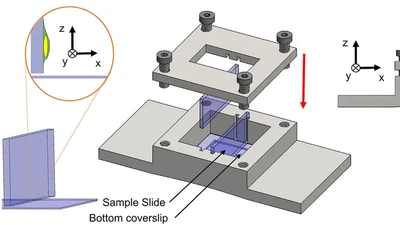
The orthogonal cross‐sectional profiles (side-views) of fluorescent objects can be distorted when reconstructed from confocal image-slices (aka z-stacks). We designed a chamber to …
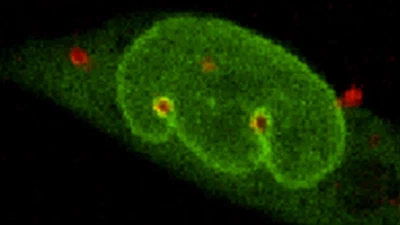
Intuition suggests that the stiff cell nucleus should be rupture-prone when forced to pass through obstacles. Instead, it behaves like an oil drop during migration, passing …
I serve as an Executive Editor at the Journal of Life Sciences, a postdoc-led community initiative. Through our JoLS-Pub program, we invite scientists to write summary articles that explain their recently published technical research in language accessible to a high-school–educated audience.
Taught Foldscope (cost-effective paper microscopes) to middle school children at Fair Haven School, New Haven, CT. They were excited to learn and took their own microscopes home.
For the quantitative part of the microscopy, the students were introduced to calibration slides for calculating the actual sizes of samples.